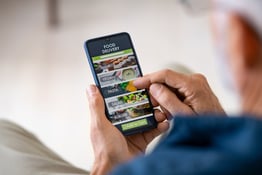
Delivery has become an expected part of the restaurant experience. Customers can open an app, find a restaurant, place an order, and have food at their door within an hour — sometimes much less.
But that convenience comes with costs, and those costs aren't always obvious to the customer.
As a Back of House consultant, I think one of the biggest challenges restaurants face is helping customers understand restaurant delivery fees and what they're actually paying for.
A delivery fee isn't necessarily a restaurant trying to make extra money. In many cases, it's there to offset the real costs of getting food from the kitchen to someone's front door.
Why Do Restaurants Charge Delivery Fees?
The simplest answer to why restaurants charge delivery fees is that delivery is a convenience for the customer — and that convenience comes with a cost for the restaurant.
When a customer comes to the restaurant, the restaurant doesn't have to dedicate an employee, packaging, or other resources to getting that meal to the customer. With delivery, all of those costs come into play.
Delivery Labor and Downtime
Consider the delivery driver. On a busy Saturday night, a driver might be constantly returning from one delivery and heading back out with the next.. That's great for the restaurant because the employee is productive and the restaurant is moving a lot of food.
But what happens on a Monday or Tuesday night?
There may be a delivery driver scheduled for a full shift even though they're only making a few delivery runs. The restaurant still has to pay that employee. The driver might do prep work or other tasks between deliveries, but there can still be significant downtime.
That's one of the biggest pieces of restaurant delivery costs that customers don't necessarily see.
To-Go Packaging
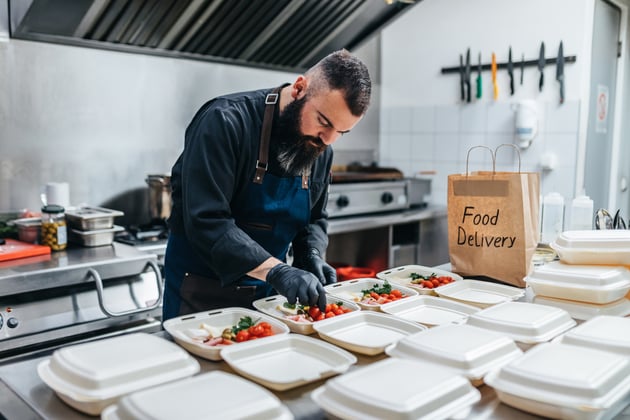
Then there's the packaging. A meal that's served in the restaurant goes onto a plate that gets washed and used again. A delivery order requires disposable containers, bags, utensils, napkins, straws, and single-serve condiments, all of which are single-use and costly.
Pizza boxes are another good example. They arrive flat and have to be assembled by someone, which can take a whole shift. That labor is part of the cost of getting the food out the door.
Restaurants also have to account for the carrying costs associated with paper and packaging. That includes storage, waste, loss, and other expenses associated with keeping those supplies on hand. As a conservative estimate, restaurants can expect carrying costs of roughly 10-15% for paper and packaging.
Fuel and Other Delivery Costs
Fuel is another obvious expense, particularly when drivers are traveling longer distances or gas prices are high. Depending on how your restaurant structures your delivery operation, you may also have to account for mileage or other forms of driver compensation.
Make Food Delivery Fees Transparent
Restaurants already operate on thin margins. If they're charging a delivery fee, they're usually trying to offset some of the expense associated with taking food out the back door and putting it in a car.
That's why I don't look at restaurant delivery fees as inherently greedy or unreasonable. The important thing is transparency. Customers should understand what they're paying for and why.
You can communicate that in several places:
- On your website
- On the menu
- During checkout
- And even on the receipt
The goal isn't to make customers feel like they're being charged for every little thing. It's to avoid surprising them with a fee they didn't expect.
Third-Party Delivery Is a Different Calculation
Third-party delivery platforms like DoorDash and Uber Eats introduce yet another layer of costs. And restaurants need to look at these platforms differently than they look at their own delivery operation.
Third-party platforms aren't only selling delivery. They’re selling access to a massive marketplace.
Customers have been trained to open these apps when they're deciding what to eat. "Let's DoorDash something" has become part of the vernacular. That's valuable exposure for a restaurant, particularly one that doesn't have a huge marketing budget.
Treat Third-Party Commissions as a Marketing Expense
Restaurants pay commissions directly to third-party delivery platforms. You have two ways you can cover these commissions:
- Pass the cost to the customer: Raise menu prices on third-party apps by roughly 25-35% to help offset the commission.
- Absorb the cost as a marketing expense: Treat the commission as part of your marketing budget, particularly when the goal is to get your restaurant in front of new customers.
The second approach can also work as a limited-time promotion to attract new customers and encourage them to order directly in the future. The mistake is paying those commissions indefinitely without a strategy for what you’re trying to accomplish.
Use Third-Party Apps To Get Discovered, Then Bring Customers Direct
This is where I think restaurants can get much smarter about their delivery strategy.
Third-party platforms can be excellent discovery tools. People are already using them to search for restaurants, so being visible there has value.
But once someone has discovered your restaurant, the goal should be to give that customer a reason to order directly from you the next time.
One simple strategy is to include a flyer or card with every third-party order. Thank the customer for ordering, then give them a reason to order directly next time. For example:
- Offer a percentage discount: Give customers 15% off their next order when they order directly through the restaurant's website.
- Offer a buy-one-get-one promotion: Use a BOGO deal or another compelling offer that's exclusive to direct orders.
- Make the benefit clear: Explain that ordering directly can mean lower menu prices because the restaurant doesn't have to account for third-party commissions.
Now you've used the third-party platform as a customer acquisition tool rather than allowing it to own the entire customer relationship.
You can also explain that ordering directly may offer a better price because the restaurant doesn't have to account for the third-party commission.
Restaurants can also use DoorDash or Uber Eats strictly as delivery providers, paying a delivery fee rather than a commission on the entire order. The long-term goal is to break the habit of customers automatically opening these apps every time they want your food.
Direct Ordering Gives Restaurants More Control
There are other reasons to encourage direct ordering beyond avoiding restaurant delivery costs.
Control the Customer Experience
When a restaurant uses its own delivery drivers, those drivers are an extension of the brand. They're trained by the restaurant and understand its standards. With a third-party driver, that control disappears.
When something goes wrong — a missing order, damaged food, or a delivery that never arrives — the customer may have to go through the third-party platform to resolve it.
Because the platform owns the transaction, it may issue a refund or chargeback to the customer and then charge that amount back to the restaurants, even when the mistake wasn’t the restaurant’s fault.
Own Your Customer Data
Third-party platforms control the customer relationship and also the associated data. Restaurants don't necessarily get the same access to customer information, ordering patterns, and loyalty data they would have from direct orders.
That information is incredibly valuable. If a customer has ordered from you five times, you want to know that. Direct ordering allows you to build that relationship, understand your customers, and encourage them to come back.
Subscribe to the Operation Station Newsletter
Run tighter operations with practical POS and operational tools, delivered monthly.
Make Direct Ordering Easy To Find
Getting customers to order directly starts with making sure they can actually find your restaurant's website and online ordering page.
Your digital presence should make direct ordering as easy as possible:
- Google business profile: Make sure your profile is complete and directs customers to your website.
- Restaurant website: Make your site easy to find when customers search for your restaurant, ideally alongside, or ahead of, third-party delivery platforms.
- Online ordering: Build ordering directly into your website so customers don't have to leave your site to place an order.
That's where SEO and generative search can help. Make sure your website clearly communicates that you offer delivery and direct online ordering, and that your Google business profile links customers back to your site.
The easier you make it for customers to find and order directly from you, the better chance you have of breaking the habit of relying on third-party apps.
Not Every Customer Will Order Directly, and That's Okay
I'm not suggesting restaurants eliminate third-party delivery.
For some restaurants, these platforms are an important source of new customers. They can put a small restaurant in front of people who otherwise might never discover it.
The key is having a strategy.
If you're using a third-party platform, understand what you're getting in return for those fees. Are you:
- Acquiring new customers?
- Boosting your visibility?
- Running a short-term promotion?
- Using the platform as part of a broader marketing campaign?
And if you're offering discounts through a third-party platform, understand where that money is coming from.
You may decide that a particular promotion is worth funding from your marketing budget. That's a legitimate strategy. But you don't want to look at the cost of every third-party order in isolation and wonder why the food isn't profitable.
At the same time, you don't want to blindly absorb those costs forever.
Educating Customers Is an Industry-Wide Opportunity
Ultimately, I think restaurants have an opportunity to do a better job explaining why they charge food delivery fees.
Customers aren't trying to avoid paying a fair price. They're trying to understand what they're paying for.
If the industry does a better job communicating the actual costs behind delivery —
- Drivers
- Downtime
- Packaging
- Fuel
- Third-party commissions
— we can make those fees less confusing. And restaurants can take it one step further by teaching customers about the benefits of ordering directly.
Use third-party platforms when they make sense. Let them help customers discover you. But once those customers know who you are, give them a reason to come directly to your restaurant.
That's better for the restaurant, better for the customer, and, ultimately, better for building a sustainable business.
Stay Ahead of Restaurant Operations Trends
Running a profitable restaurant means keeping up with the strategies, tools, and trends shaping day-to-day operations — from delivery and labor costs to technology and customer experience.
Subscribe to Operation Station, Back of House's monthly newsletter, for practical insights and actionable strategies to help restaurant operators run more efficient, profitable businesses.