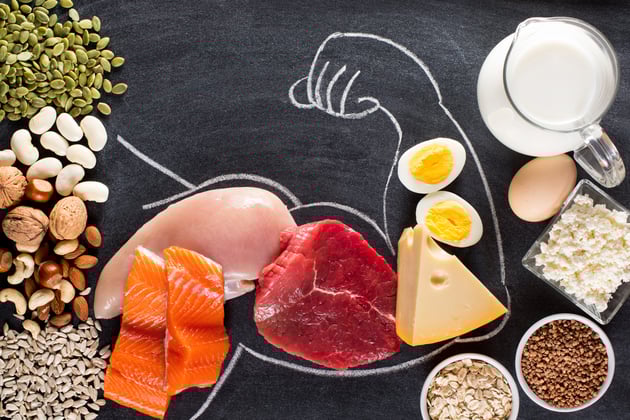
If you go to a Chipotle Mexican Grill, you can order a paper cup filled with chicken chunks. Shake Shack is selling lettuce-wrapped hamburgers. Dunkin’ now offers lattes with protein-enriched milk. High-protein food trends are reshaping restaurant menus throughout the industry, says a recent Wall Street Journal article.
At a time when restaurants are struggling with rising food costs and shrinking traffic, many are turning to these protein-focused dining trends as a way to meet changing customer expectations. But is this the right move for your restaurant? Are high-protein food trends just a flash in the pan, or can a protein-packed menu help your restaurant put on a little muscle?
Why High-Protein Food Trends Make Sense
It’s clear that consumers are increasingly drawn to protein-centric menu items. According to a recent article from Restaurant Business Online, nearly 50% of survey respondents said they would be willing to switch restaurant brands in favor of menus with more protein-rich items.
If you own a restaurant, these findings should definitely capture your attention. Consumers are actively seeking out more protein-rich dining options. There are a few reasons for this.
- GLP-1 weight loss drugs are changing the way people eat. Weight loss drugs like Ozempic and Mounjaro can suppress the appetite and shrink muscle mass. People who are prescribed these drugs are increasingly likely to choose menu items that are light on carbs and heavy on protein.
- Younger millennial, Gen Z, and Gen Alpha consumers are making increasingly health-conscious choices when dining out. As a result, many are choosing nutritional, protein-rich menu items for what they view as the long-term health benefits such as muscle maintenance and heart health.
- More broadly, diners today expect menu flexibility. Consumers expect to be able to make modifications and specifications to their orders. For many, this means having plenty of protein-rich options and add-ons to choose from.
“The reality is that these high-protein food trends are actually based on some very real demographic shifts and some very real changes in what consumers expect from their dining experience,” says Back of House operations expert Rachel Morgan. “So it makes sense for restaurants to take a few steps toward meeting these expectations.”
Finding a Balance Between High Protein and High Prices
It may make sense to meet these expectations, but doing so can come at a high cost. According to the National Restaurant Association’s (NRA) 2026 State of the Restaurant Industry report, global food producers are struggling with low beef, pork, and egg supplies.
These supply shortages come at a time when demand for animal proteins is higher than ever. Naturally, these conditions are conspiring to drive up prices for animal proteins across the board.
But as we’ll discuss below, there are a few ways you can tweak your menu to control costs while still aligning with high-protein food trends. As we’ll also discuss, consumers have shown resilience when it comes to paying higher prices for protein.
This may be a testament to the strength of all these protein-focused dining trends, and a compelling reason to embrace these trends as an opportunity in spite of pricing pressures.
5 Ways To Capitalize On High-Protein Food Trends
So what does this mean for your restaurant?
There are actually quite a few low-risk, high-reward ways to get on board with today’s protein-focused dining trends.
1. Cater Directly to GLP-1 Users
“In some cases, embracing high-protein food trends may not require some massive overhaul of your menu,” says Back of House restaurant tech consultant Spencer Michiel. “You probably already have some protein-rich items on your menu. It’s about highlighting them for today’s consumer.”
In many ways, this is an issue of menu design more than anything else. As a consumer demographic, those who use these weight-loss drugs tend to seek out protein-rich, muscle-building dishes. Today, some restaurants are responding by actually labeling protein-rich menu items as “GLP-1 friendly.”
An article from CNBC says that this is actually part of a rapidly-growing menu design trend. The article notes that 28.4% of restaurants now call out proteins explicitly on their menu, as compared to just 5.9% a decade ago.
While the language you choose should be consistent with your brand and the tone of your menu, now is a great time to shine a brighter spotlight on your protein-rich dishes.
2. Promote Protein-Powered Specials
Naturally, protein isn’t the only thing consumers are focusing on these days. During a time of rising prices, consumers are also extremely conscious about value. Promote specials, discounts, and value-based combo meals around your protein-forward dishes.
“Diners are looking for healthier, protein-based options,” says Rachel. “Keep that in mind when you’re coming up with your happy hour specials and your loyalty program discounts. If you really want to capitalize on protein-focused dining trends, make your protein-packed dishes a big part of your promotional efforts.”
With a few well-chosen marketing tools like Localyser, SocialPilot, or Sprout Social, you can promote your new protein-rich specials on social media, monitor online reviews for feedback on these specials, and gather data-driven insights on the kinds of protein-based dishes your customers really want.
3. Offer Protein-Based Add-Ons
Restaurants in the fast-casual space have already seen a lot of success with protein-based upselling strategies. CNBC reports that salad chain Sweetgreen boosted its dinner sales from 35% to 40% of its overall sales simply by adding “protein plates” to their menu. You may be able to do the same by creating opportunities for diners to choose from a selection of protein add-ons.
“You should be thoughtful about your approach to these high-protein food trends,” says Spencer. “Match your promotions to your menu. If you sell a popular Caesar salad, give diners a nice selection of protein add-ons. If your customers come in for your pasta, give them the option of mixing and matching proteins and pastas.”

Subscribe to the Operation Station Newsletter
Run tighter operations with practical POS and operational tools, delivered monthly.
Bear in mind that customers also expect more personalization and flexibility these days. Offering a variety of protein add-ons is a great way to embrace the protein craze while also providing that personalization and flexibility.
But as you make changes to your menu, be sure to leverage the data available through both your POS (point of sale) system and your inventory management system. These data sources are critical as you make important menu-engineering decisions about things like portions and pricing.
4. Cultivate Plenty of Plant-Based Proteins
“A lot of times, when you see ‘add a protein’ on a menu, you’ll see meat-based options like grilled chicken or sauteed shrimp,” says Spencer. “But protein is also super important to vegan and vegetarian diners. Not only that, but given the high cost of beef and pork, it’s also a lot more cost effective.”
An article from Restaurant Business highlights a number of restaurants that feature plant-based, protein-rich options on their menu. Naturally, these items can appeal to vegetarians and vegans seeking protein-rich dishes. But these plant-based dishes can also appeal more broadly to younger and increasingly health-conscious consumers.
So as you consider new high-protein restaurant menu ideas, make sure to incorporate a healthy array of plant-based, protein-rich dishes. Think about creative ways to incorporate protein-rich plant-based ingredients such as quinoa, lentils, chickpeas, and black beans in your menu, or offer these items as protein add-ons.
5. Enhance the Protein Content in Key Dishes
As we noted earlier, animal proteins are extremely vulnerable to pricing pressures. However, research shows that not only are consumers actively looking for high-protein foods on your menu, but they’re actually willing to pay more for them. According to the NRN, 38% of survey respondents say they’d pay a premium for those protein-rich dishes.
“Even in spite of the pricing issues, these high-protein food trends are potentially good news for restaurants who are worried about raising menu prices,” says Rachel. “Now is a great time to tweak a few recipes. Add a double-dose of protein to some of your bestsellers and upcharge accordingly.”
Many of the leading fast-casual and QSR chains are already doing this with some success. Subway now offers something called a Protein Pocket. In late 2025, Starbucks introduced a full line of protein-packed lattes. Chipotle recently rolled out an entire high-protein menu.
With a few creative high-protein menu ideas, this could be your chance to raise some menu prices without offending your customers. Naturally, you’ll want to do so carefully, thoughtfully, and with the help of a good recipe costing platform like MarketMan or Meez.
Embracing Protein-Focused Dining Trends with the Right Tech
Whether you’re planning to tweak your recipes, update your menu, or launch a new promotional campaign, you want to proceed thoughtfully. Any decisions you make about pricing, portions, ingredients, and even the language that you use on your menu should be informed by real data and insights.
You can access that data, insight, and much more with the right combination of technologies. Reach out today to chat with Rachel, Spencer, or any of our other in-house operations and restaurant tech experts. We’ll help you find the tools you need to stay on top of the latest dining trends.