If you want proof that American consumers are feeling the strain from rising prices, look no further than the restaurant industry. According to Nation’s Restaurant News (NRN), recent data shows that restaurant diners are seeking deals and discounts at the highest rate in 50 years.
With nearly 30% of all restaurant visits tied to some type of savings deal, owners and operators are under increasing pressure to offer restaurant discounts without hurting margins.
“Restaurants are already dealing with the thinnest of margins,” says Back of House restaurant tech expert Spencer Michiel. “So it’s a really challenging balancing act between attracting deal-seeking diners and offering discounts that won’t hurt your bottom line.
“Still, with a few thoughtful changes to your menu and your marketing strategy, you can juice your traffic and help your profit margins at the same time.”
We’ll take a closer look at how your restaurant can find this balance and we’ll provide some actionable tips on how to attract deal-seeking diners by getting onboard with just a few well-chosen value dining trends.
But first, let’s take a look at what’s behind the recent surge in traffic from deal-seeking diners.
Why Value Dining Trends Are Way Up
Let’s start with the obvious. Food prices are up and you don’t have to be an economist to know it. Consumers can feel it. NRN reports that supermarket food prices were up by 2.7% in 2025, and during the same period, the cost of dining out was up by 4.6%. As these prices have risen, foot traffic has been down across the restaurant industry.
However, during the very same period, value-driven menus have actually seen a 1% uptick in customers. In fact, the NRN reports, deal-driven traffic to restaurants has grown by 3.1% since 2022, its most aggressive rate of growth since the Great Recession of 2008-2010.
“Clearly, people still like dining out, but they’re looking for ways to save money at the same time,” says Back of House Director of Marketing Hilary Young. “Obviously, restaurants are under a lot of pressure to embrace value dining trends. But there’s more to value than just cutting your prices. It’s also about delivering on changing customer expectations.”
5 Value Dining Trends That You Can Use to Boost Profit Margins
So how can you deliver on customer expectations in an increasingly cost-conscious environment?
With a few smart tweaks to your menu, your recipes, and your discounts, you can bring more deal-seeking diners through the door without putting the squeeze on your margins.
1. Embrace the Appetizer Economy
Your customers aren’t just looking for discounts. They’re looking for more affordable ways to dine out. That’s why more consumers than ever before are sticking with starters as a way to save money.
A recent article from CNBC reports that appetizer sales are up 20% overall across the food service industry. Meanwhile, sales of entrees and desserts remain relatively flat. Cost-conscious consumers are trending toward mozzarella sticks and jalapeno poppers instead of burgers and sandwiches.
Capitalize on this trend by expanding your appetizer menu, offering more small-dish specials, and creating starter-specific promotions.
“People want to visit your restaurant, but they also want to know that it doesn’t have to cost a fortune,” says Hilary. “Put a bigger spotlight on your appetizers. Promote some of the more affordable items on your menu and give your customers plenty of low-cost options to choose from.”
2. Engineer Value Using Your Menu
Menu optimization is another key to unlocking more value for your customers. The way you present, sequence, and highlight items on your menu can directly influence how customers order. You can use this influence to make customers feel like they’re getting their money’s worth even without applying deep discounts.
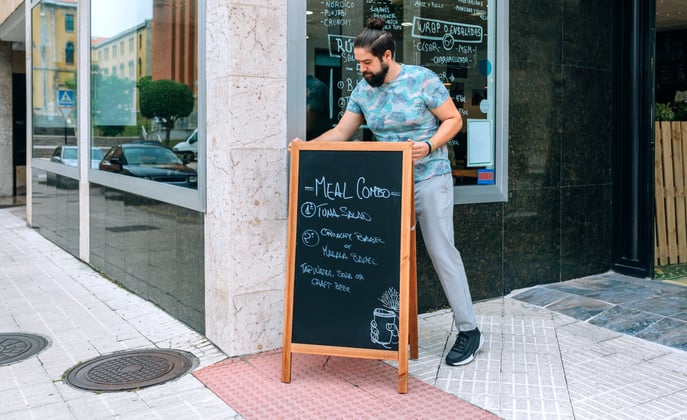
Bundling items together is a great way to do this. Consider optimizing your menu with options like meal combos and family packs. Offer your customers discounts for bundling some of your menu’s most popular dishes with high-margin items like starters and beverages. And focus on upselling value-driven add-ons.

Subscribe to the Operation Station Newsletter
Run tighter operations with practical POS and operational tools, delivered monthly.
“Use your menu to spotlight low-cost upgrades like extra sauce, additional protein options for your Caesar salad, or premium apps, like loaded fries. These are all great ways to lift your average check sizes while still making your customers feel like they got a good deal,” says Spencer.
He also suggests using menu engineering software so that any changes you make to the pricing, positioning, and bundling of menu items is informed by real data.
3. Step Up Your Portion Control
In addition to optimizing your menu, you may consider optimizing your recipes by adjusting portion sizes. Offer your customers smaller variations on your main dishes like half-portions or lunch-sized entrees. This strategy can provide your customers with a bit of price relief without cutting into your profitability.
“Naturally, smaller portions and more flexible options can attract customers who are looking to spend less,” says Spencer. “But it’s also a good way to reduce waste. Smaller dishes lead to less prep waste in the kitchen and less plate waste in the dining room.”
Spencer also notes, “A good food inventory management system can help you adjust recipes and portion sizes using sound data. This means you can identify and adjust the dishes that give you your best margins. Hopefully, this translates into more customers ordering your most profitable items.”
4. Promote Off-Peak Value Options
“Another way to think about value dining trends,” says Hilary, “is as an opportunity to drive traffic during your slowest shifts. Use those discounts to fill more seats on the off-peak hours.
“Build your most generous deals around weekday specials and late-night menus, and promote limited-time offers during your slower seasons,” she suggests. “Now, instead of cutting into your profit margins during your busiest shifts, you’re using value as a way to fill unused capacity.”
This is also an opportunity to lean into your loyalty program. Rather than offering blanket discounts, think about ways that you can reward repeat customers with point-based discounts and offers.
For instance, tie your discounts to visit frequency. This is a great way to offset any impact on your margins by generating more repeat business, especially during those off-peak periods.
5. Look For Value Beyond the Pricing
There are other important dimensions to courting deal-seeking diners. It isn’t simply about offering discounts, especially in an environment where so many other restaurants are also looking for ways to bring in bargain hunters.
“When we talk about value dining trends, value is about more than just affordability,” says Hilary. “It also means using all the resources that we have at our disposal to deliver on customer expectations.”
The NRN article points out that restaurants that focus only on price modification have had limited success in a value-driven market. Consumers also place value on things like digital access, quality control, customer service, and innovation.
In short, you need to invest in the customer experience even as you look for ways to keep prices down for your customers. This is where advanced technologies like all-in-one POS systems and AI phone ordering systems can be just as important as thoughtfully chosen deals and discounts.
Using the Tech to Drive Value
So what kinds of innovations should you be embracing? Which technologies can actually move the needle for your operation?
The answer is a little different for every business. Reach out to Spencer or another of our in-house restaurant tech experts and we’ll work with you to figure out exactly what you need.